The process difference is straightforward
Roasting cooks peanuts mainly with dry heat or hot-air style heat transfer. Frying cooks them in hot oil. That difference affects flavour, texture and the amount of frying oil involved, but it does not tell you everything about the finished snack.
Roasted does not automatically mean oil-free
A roasted peanut snack can still use a small amount of oil to help seasoning adhere or to shape the final flavour. The useful questions are how the product is prepared, what the ingredient list says and what the measured fat and energy values show.
Salt and masala can matter as much as process
Two roasted peanut snacks can have very different sodium and seasoning profiles. Masala coatings add spices and sometimes oil, while salted peanuts may use a simpler recipe. Compare the complete label instead of treating one process word as a nutrition score.
What ZANZAN's current reports show
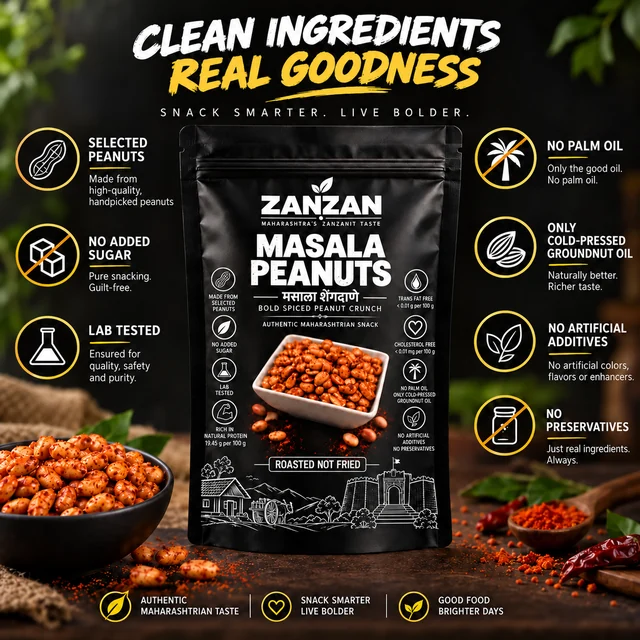
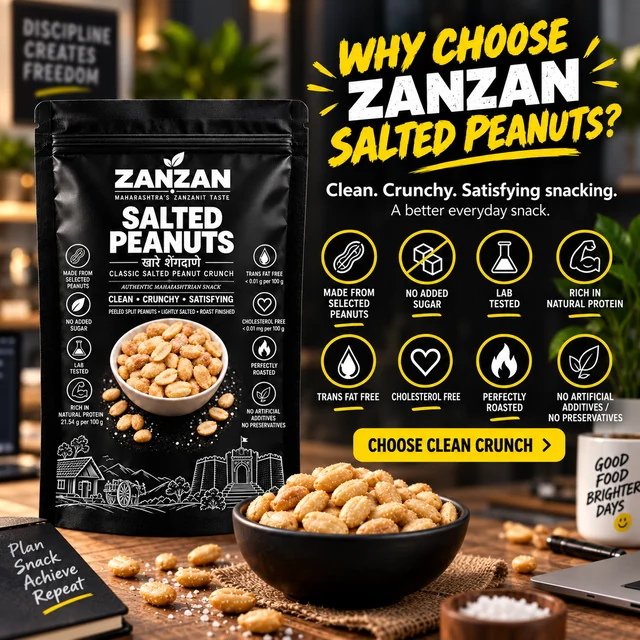
The current tested Masala Peanuts sample reports 19.45 g protein, 36.37 g total fat and 554 mg sodium per 100 g. The tested Salted Peanuts sample reports 21.54 g protein, 46.58 g total fat and 668 mg sodium per 100 g. Per-100 g figures are comparison values, not suggested serving sizes.
ZANZAN's peanut snacks are roasted, not fried
ZANZAN Masala Peanuts are roasted rather than deep fried and use cold-pressed groundnut oil in the current recipe. ZANZAN Salted Peanuts are roasted rather than fried. The current recipes do not use palm oil. Always use the physical pouch as the final reference for the batch you receive.
How to compare another brand fairly
Check the process description, ingredient list, oil type, sodium, total fat, energy, serving size, allergen statement and shelf-life guidance. If a brand makes a broad health claim, look for the specific nutrition or formulation evidence behind it rather than relying on the headline alone.
Choose by flavour after checking the facts
Masala Peanuts are the bolder option when you want chilli, garlic and Maharashtrian seasoning. Salted Peanuts keep the flavour simpler. Both work for tea, travel and sharing, but the right choice is a taste decision rather than a universal nutrition verdict.
Are roasted peanuts always healthier than fried peanuts?
Not automatically. Roasting and frying are different cooking processes, but the finished snack still needs to be compared by ingredients, added oil, sodium, energy, total fat, portion size and any other nutrition factors that matter to you.
Can roasted peanuts still contain oil?
Yes. A roasted snack may still use some oil for seasoning or flavour adhesion. The ingredient list and measured nutrition are more useful than assuming roasted means oil-free.
Are ZANZAN Masala Peanuts and Salted Peanuts fried?
ZANZAN presents both peanut snacks as roasted rather than fried. Check the current product page and final pouch for the latest process and ingredient information.